Stone has long been an inseparable part of Iranian architecture; yet among its various types, Ramsheh Travertine holds a special place. This natural stone, quarried from the mountains of the Ramsheh region in Isfahan province, has attracted the attention of Iranian architects not only for its aesthetic appeal but also for its technical and historical significance—both in traditional structures and contemporary projects.
Nonetheless, why Ramsheh Travertine? What sets this stone apart from other building materials, and what role has it played in shaping the identity of Iranian architecture?
In this article, we explore these questions through a comprehensive look at the history, characteristics, and cultural and technical applications of this valuable stone—so that whether you’re active in the construction industry or simply passionate about Iranian architecture, you’ll gain a deeper understanding of this material.
Geological and Historical Origin of Ramsheh Travertine
Ramsheh Travertine is one of Iran’s unique natural treasures, formed through the deep geological history of this land. Not only is it the result of complex and long-term geological processes, but it also represents a significant part of the historical and industrial memory of the Ramsheh region. Its geographical location, soil composition, and climatic characteristics have made Ramsheh Travertine distinct in texture and quality compared to many similar stones.
The History in the Landscape of Ancient Iran
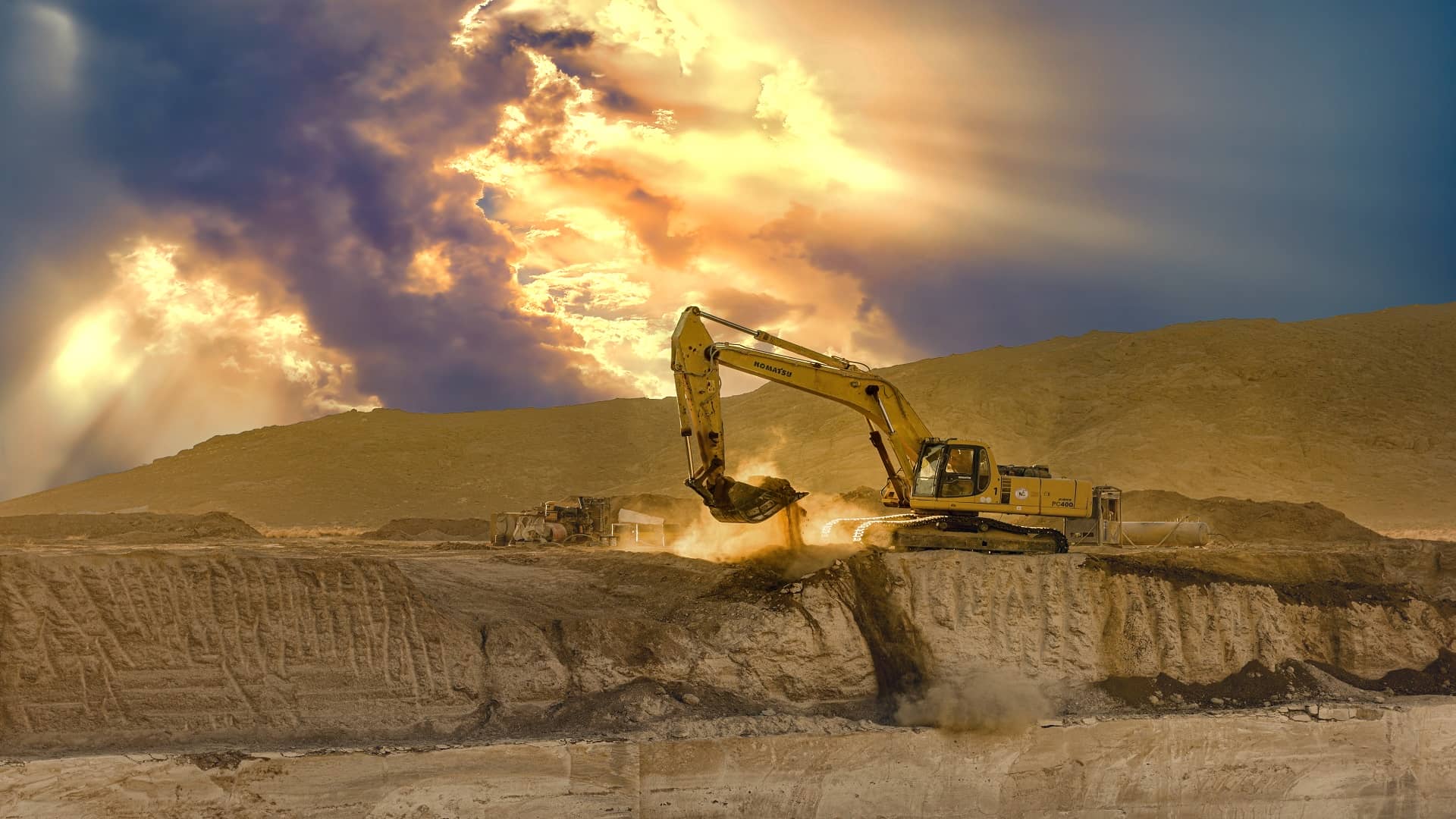
Ramsheh Travertine was formed over thousands of years through the deposition of minerals in the region’s hot springs. In ancient times, the presence of natural limestone resources and geothermal activity in the Ramsheh area led to the emergence of this unique type of travertine. These natural processes resulted in the creation of dense, polished, and richly colored layers that have retained their strength and beauty to this day.
Initial Discovery and Exploitation in the Ramsheh Region
The earliest evidence of Ramsheh Travertine extraction dates to the early decades of the last century, when residents began mining the stone in a traditional and limited manner. With the advancement of the construction industry in Iran, architects and builders began to recognize the physical properties of this stone, leading to the gradual industrial exploitation of the region’s quarries. Today, Ramsheh is recognized as one of the key centers for supplying travertine in the country.
The Role of Ramsheh Quarries in the Development of Iran’s Stone Industry
Ramsheh Travertine quarries hold strategic importance not only for Isfahan province but for the entire Iranian stone industry. Their high quality, color diversity, and easy accessibility have made them a key player in the export of building stones in recent years. Moreover, the development of processing infrastructure in the region has contributed to economic growth and sustainable job creation.
Application of Ramsheh Travertine in Traditional Iranian Architecture
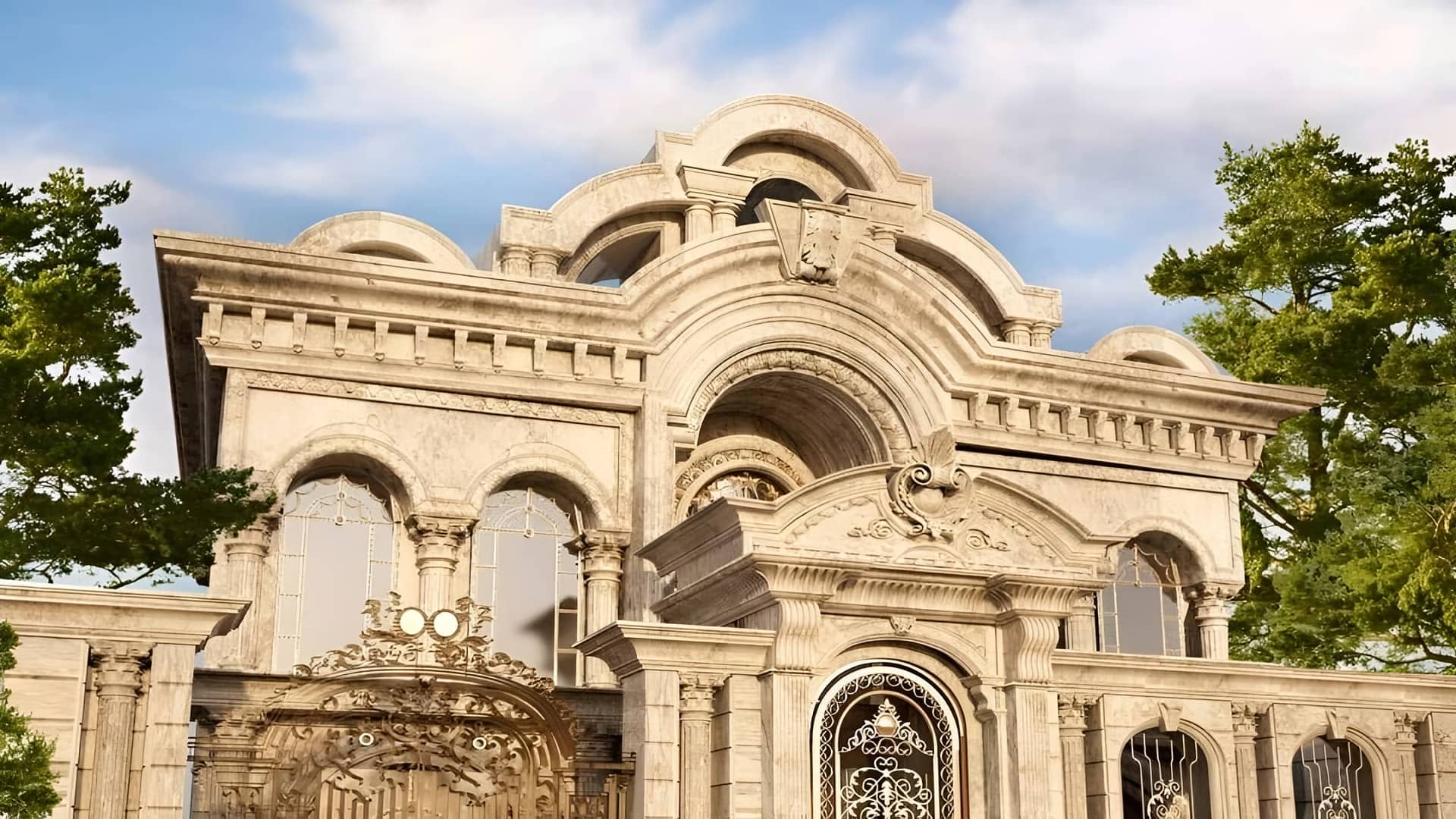
In traditional Iranian architecture, the selection of materials has always been guided by climate considerations, aesthetic values, and durability. Ramsheh Travertine, with its natural texture and warm tones, has been a favored material in the construction of historical and cultural buildings.
Utilization in Public and Religious Buildings During the Safavid and Qajar Eras
During the Safavid and Qajar periods, Ramsheh Travertine was applied in the construction of mosques, schools, caravanserais, and other public buildings. Its light color and uniform texture, combined with high resistance to erosion, made it an ideal choice for façades and interior spaces of religious structures.
Technical Features; Valued by Iranian Architects
Traditional Iranian architects have always sought materials that combine beauty with high durability and ease of shaping. Ramsheh Travertine, due to its dense structure and ease of cutting, gained widespread popularity among architects. Its suitability for engraving, decorative patterns, and stone ornamentation has been another key technical advantage of this stone.
The Impact of Color and Texture in the Aesthetics of Traditional Architecture
The warm and natural tones of Ramsheh Travertine—from cream and beige to light honey—created exceptional visual harmony with other traditional architectural elements such as brick, plaster, and wood. This quality gave traditional spaces both a sense of warmth and intimacy, as well as visual elegance. However, the stone’s soft texture and organic veining also played a key role in conveying the concept of “connection with nature” in traditional Iranian architecture.
The Revival of Ramsheh Travertine in Contemporary Iranian Architecture
With the rise of modern architectural approaches and a renewed emphasis on national identity, Ramsheh Travertine has regained its place in Iranian architectural projects. Today, this stone serves as a bridge between tradition and modernity, finding its way into contemporary design concepts.
Reviving Traditional Materials in Modern Designs
Many architects of the new generation, in their efforts to reinterpret traditional elements within a modern framework, have turned once again to natural materials such as Ramsheh Travertine. This stone has successfully fulfilled its role in contemporary projects—both in terms of aesthetics and functionality.
Combining Traditional and Minimalist Styles with Ramsheh Travertine
The soothing colors of Ramsheh Travertine, paired with the clean lines and volumetric simplicity of minimalist design, have led to the creation of truly unique spaces. This approach has given Ramsheh Travertine a prominent role in the design of modern office, residential, and public environments.
Modern Projects Inspired by the Past
In projects such as the restoration of historic homes, the construction of museums, and cultural centers, architects have used Ramsheh Travertine to evoke a sense of authenticity and connection to the past. In the effort to revive traditional Iranian materials, the Echo Stone showroom has played a significant role in reintroducing Ramsheh Travertine to contemporary architecture.
Why Do Iranian Architects Prefer Ramsheh Travertine?
Ramsheh Travertine has long been a favored choice among Iranian architects due to its unique combination of technical, aesthetic, and regional qualities. This stone has successfully met the specific demands of Iranian architecture in terms of durability, visual appeal, and harmony with nature.
Longevity and Long-Term Performance in Iran’s Climate
Iran is a country with diverse climates, many regions being dry and hot. Ramsheh Travertine has demonstrated long-term durability due to its high resistance to temperature fluctuations, UV radiation, acid rain, and natural erosion. These qualities make it a cost-effective choice for exterior facades and open spaces, requiring minimal maintenance over time.
Simplicity in Cutting and Execution of Traditional Iranian Motifs
Another key reason for choosing this stone is its high workability and suitability for crafting intricate Iranian designs. The relatively soft yet dense texture of Ramsheh Travertine allows artisans and stone carvers to accurately render motifs such as arabesques, muqarnas, and other traditional patterns without cracking or flaking.
Harmony with Native and Nature-Oriented Materials
Iranian architectural design has always aimed to align with the climate and natural surroundings. The natural, matte, and warm tones of Ramsheh Travertine blend effortlessly with materials such as adobe, brick, plaster, and wood. This aesthetic harmony has made it a favored choice in traditional and climate-responsive designs.
Cultural and Regional Significance of Ramsheh Travertine
Beyond its technical attributes, Ramsheh Travertine is deeply rooted in the culture, local narratives, and collective memory of the region’s people. It is not merely a component of architecture, but a symbol of cultural identity in the central areas of Iran.
Local Narratives About Stone Extraction in Ramsheh
In the villages and surrounding areas of Ramsheh, numerous stories exist about the discovery and extraction of this stone. Some accounts trace the earliest quarrying efforts to families who, generation after generation, manually extracted stone from the mountains. However, the name “Ramsheh Stone” is deeply intertwined in the minds of the locals with hard work, craftsmanship, and regional heritage.
Connection Between Ramsheh Stone and the Architectural Identity of Central Iran
In many traditional buildings across central Iranian cities such as Isfahan, Naein, Ardestan, and Kashan, stones extracted from Ramsheh have been widely used. This enduring relationship has made Ramsheh Travertine an inseparable part of the architectural heritage of these regions. Its use represents a return to the roots of authentic Iranian architecture and a commitment to preserving cultural identity.
Economic and Export Significance of Ramsheh Travertine in Contemporary Architecture
Ramsheh Travertine holds a prominent position not only in Iran’s domestic market but also in international trade, where it is considered one of the most in-demand and value-generating stones. Its high quality, natural appearance, and cultural heritage have made it an attractive product in global markets.
The Export Role in Showcasing Iranian Architectural Style Globally
With the growth of Iran’s stone export industry, Ramsheh Travertine has emerged as a cultural ambassador in international architectural projects. By choosing this stone, foreign designers and builders not only benefit from its high quality but also gain indirect exposure to Iranian cultural heritage and architectural traditions. Its export to regions such as the Persian Gulf, Europe, and East Asia plays a significant role in promoting Iranian architectural style worldwide.
Utility by International Designers in Projects with Iranian Identity
In projects aimed at reviving or drawing inspiration from Iranian culture and art, many international designers prefer to use native materials such as Ramsheh Travertine. This choice leads to the creation of spaces that not only meet technical and aesthetic standards but also carry a strong cultural resonance. As a result, Ramsheh Travertine has become an integral part of the design language in global architectural projects.
The Future of Ramsheh Travertine in Iranian Architecture
With growing interest among architects in sustainable and locally sourced materials, Ramsheh Travertine is poised for a bright future in Iranian architecture. As a nostalgic yet modern choice, its high quality, natural beauty, and rich cultural background pave the way for its renewed role in contemporary design.
Potential Application in Eco-Centric and Sustainable Projects
As sustainable architecture becomes a key priority in urban design, the use of natural materials like Ramsheh Travertine can contribute to reducing carbon footprint and enhancing environmental compatibility. Locally sourced, this stone minimizes the need for long-distance transportation and aligns seamlessly with the principles of eco-centric architecture.
Innovation in Processing While Preserving Authenticity
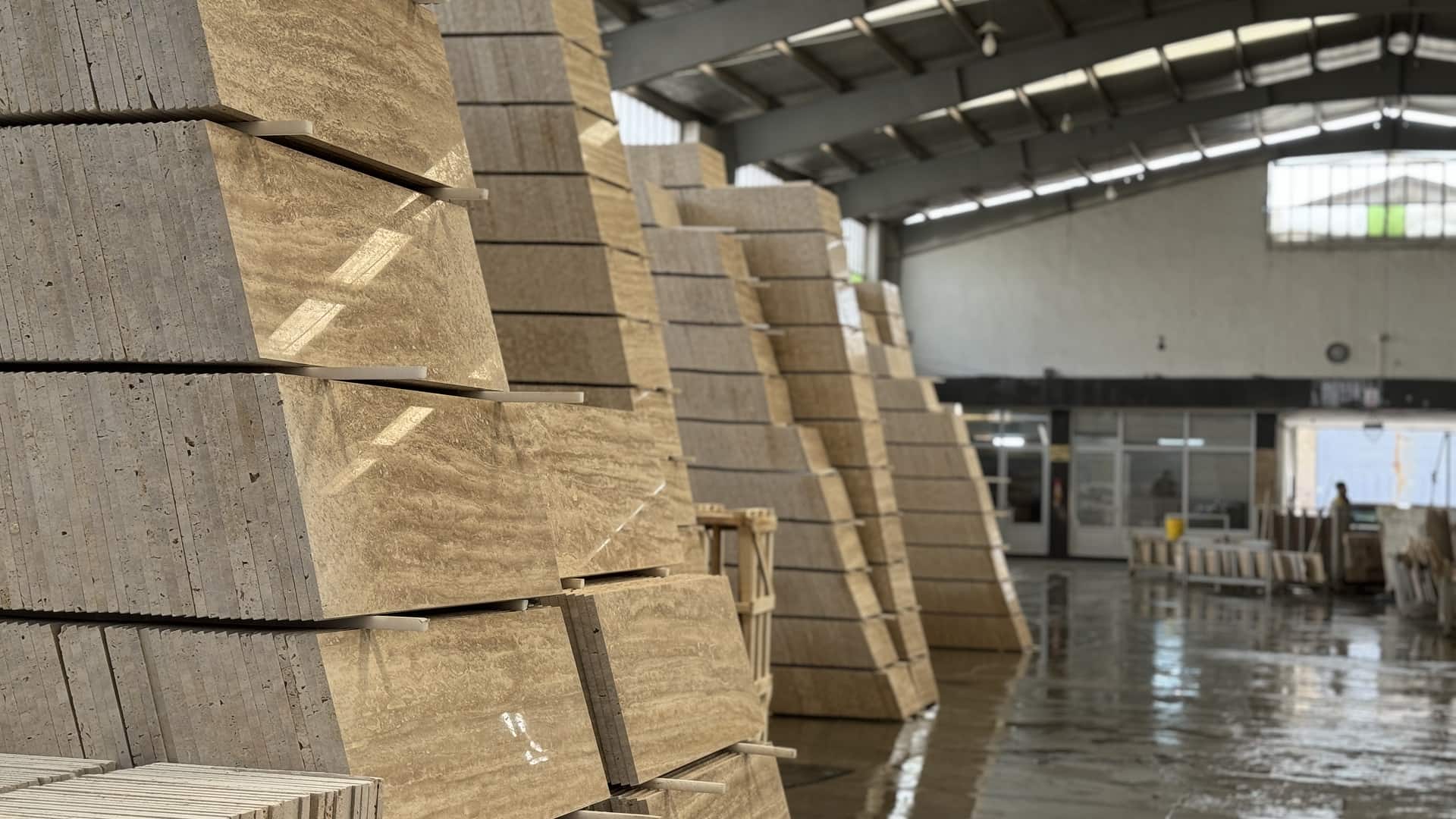
The processing of Ramsheh stone is no longer confined to traditional methods. Today, advanced technologies such as CNC, waterjet cutting, and diverse finishing techniques can be applied—while maintaining the stone’s original character and natural color. This fusion of tradition and technology offers an ideal platform for architectural creativity.
Introducing Ramsheh Travertine by Shahab Sang Sepahan Group
Shahab Sang Sepahan Group, leveraging its mineral, technical, and export capabilities, stands as one of the pioneers in the production and distribution of Ramsheh Travertine in Iran and the region. With the support of three specialized subsidiaries, the group meets both domestic and international market demands with exceptional quality.
Historical and Technical Features of Ramsheh Stone Blocks from Sadaf Quarry
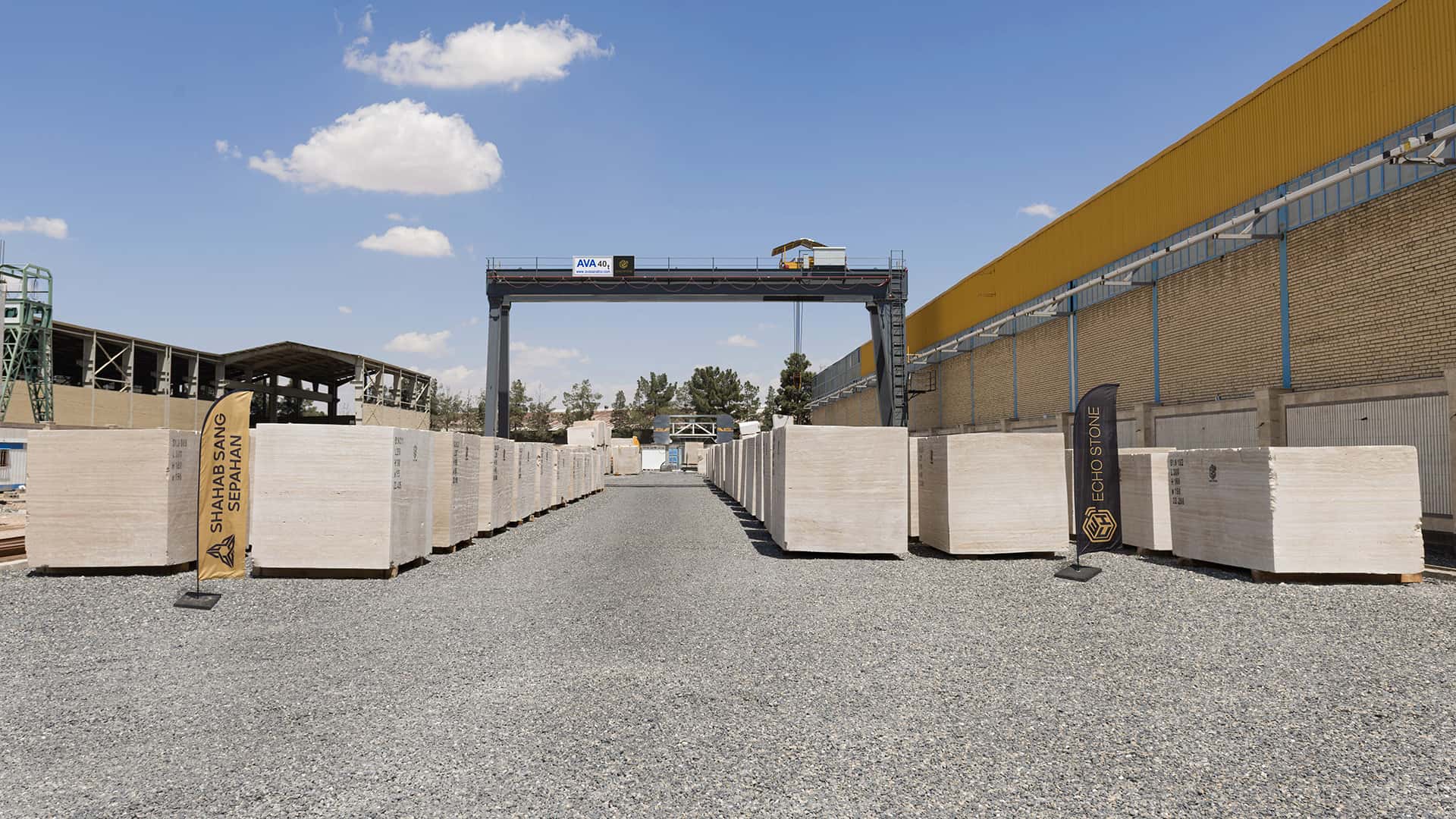
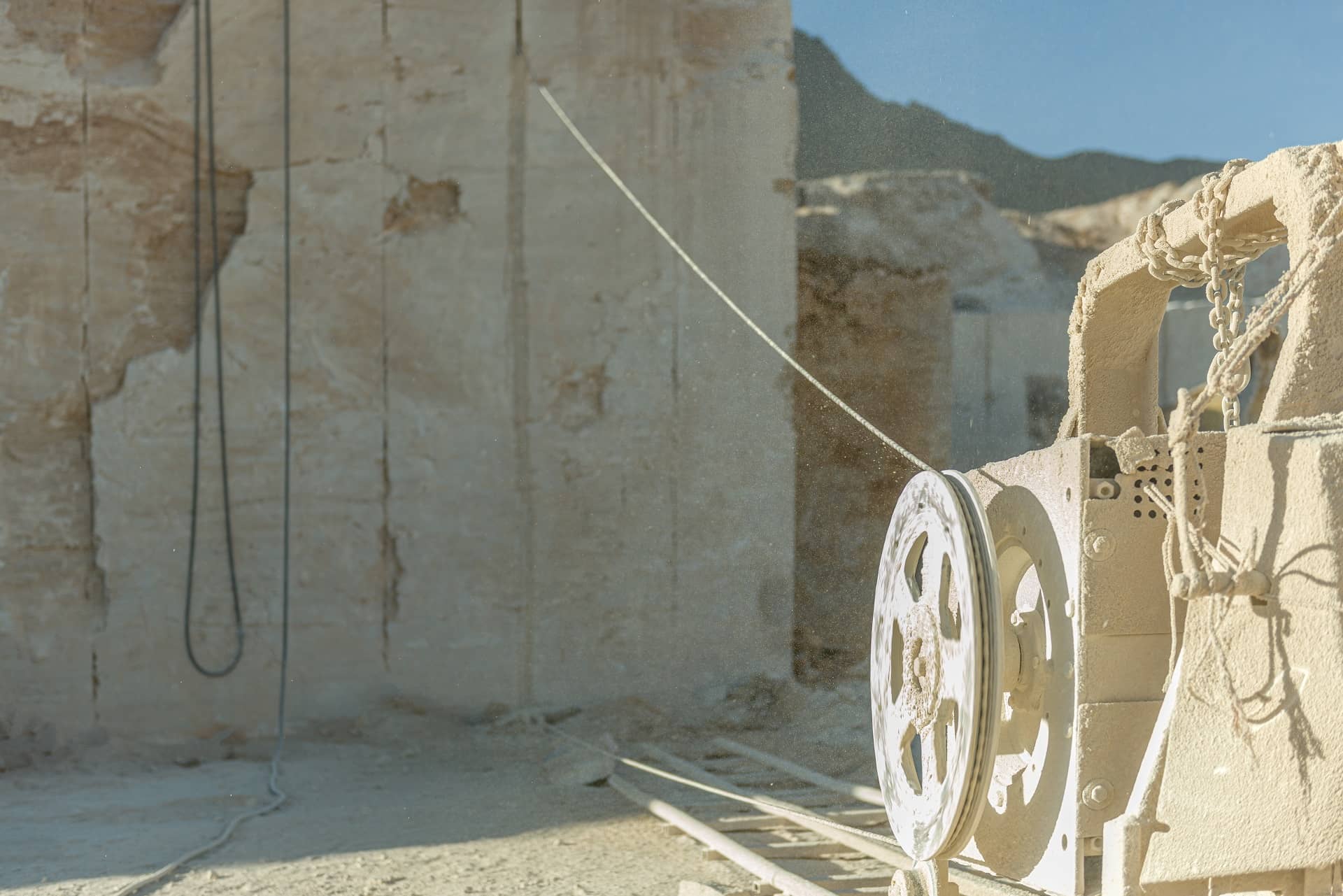
Sadaf Quarry, one of the main sources of Ramsheh Travertine extraction, features naturally colored veins, high density, and exceptional uniformity. Its extraction history dates back decades, and its expert team delivers precisely cut blocks with minimal waste, adhering strictly to technical standards.
Processing Tailored to Iranian Architecture at Echo Stone Showroom
As the specialized showcase of Shahab Sang Sepahan Group, the Echo Stone showroom serves as a bridge between production and design in authentic Iranian architectural projects. Visitors can closely observe and compare various Ramsheh Travertine blocks, sorted with precision, offering a wide range of colors and processing finishes.
The presence of the Echo Stone showroom has enabled designers, architects, and project investors to make more informed decisions when selecting stone materials suited to Iranian or hybrid architectural styles. Moreover, this space provides a professional platform for constructive interaction between producers, architects, and exporters.
Export Support for Global Projects Featuring Iranian Architecture
The export division of “Almas Stone” has provided professional services—from packaging and standardization to international shipping—supporting the export of Ramsheh Travertine to over 10 countries. With a deep understanding of global market needs, this team enables the supply of stone for projects inspired by Iranian architecture abroad, introducing the authentic image of Iranian stone to the world.
Summing up
Ramsheh Travertine is not only a part of Iran’s geological history but also deeply embedded in the cultural fabric of Iranian architecture. From its use in religious and public buildings during the Safavid and Qajar eras to its resurgence in contemporary projects, this stone has consistently played a key role in expressing the identity of Iranian architecture.
Its high durability, ability to accommodate traditional designs, compatibility with Iran’s diverse climate, and unique beauty have made it a preferred choice for architects past and present.
In this journey, Shahab Sang Sepahan Group has played a vital role by precisely extracting Ramsheh stone and offering professional services through the Echo Stone showroom. This showroom acts as a bridge between production, design, and export, enabling both domestic and international designers to confidently incorporate the stone’s quality and authenticity into their projects.
Ultimately, the future of Ramsheh Travertine is bright. Whether in the domestic market or in export-driven projects centered on Iranian architecture, this stone continues to hold its place and is redefining its role in modern global design through innovation.